
La Verne Previous Resident Sources
The record trail behind previous residents has two layers. The title layer runs through the Assessor, the Los Angeles County Registrar-Recorder/County Clerk, and legal descriptions. The household layer runs through city directories, census schedules, newspapers, obituaries, cemetery records, and sometimes probate. The source table keeps those layers distinct.
| Source | Years It Covers | Where Held | What It Shows |
|---|---|---|---|
| Recorded real-estate records | 1851-present | RR/CC Norwalk | Grantor, grantee, recording data, legal description |
| Recorder floor collections | 1851-1957 and 1958-present | Lower level and second floor, Norwalk | Navigation by record date, not a missing-record gap |
| Pomona-area directories | 1896-1951 irregular run | Pomona Public Library Digital Collections | Listed names, addresses, occupations, spouse or widow marks |
| LAPL regional directories | 1875-1987 selection | Los Angeles Public Library Visual Collections | Name and address entries, some street sections |
| Federal census | Public through 1950 | NARA and genealogy institutions | Enumerated household, age, relationship, birthplace, occupation |
| La Verne Leader and archives | Issue or collection span varies | Wilson Library and La Verne Library | Obituaries, social notices, family and community clues |
| City permits and code files | Exact online start not verified | City of La Verne departments | Work, applicant, owner, contractor, and project dates |
Start with the current parcel for a recent trail. Start with a directory, census, or newspaper for a household question in a known era. If a source is missing, record that gap and move sideways to another custodian rather than treating it as proof that nobody lived there.
Begin a La Verne Previous Residents Search
Normalize the address through USPS, then search the Los Angeles County Assessor Portal. Save the AIN, situs, legal description, parcel status, year-built information, and event history. The AIN is a more durable key than a street line when a parcel splits, merges, or changes its postal wording.
The public Assessor detail can show an event recording date, document number, document type or reason, parcel count, percentage, and assessment changes. It may not show an owner name or tax mailing address on the Internet page. Use the official roll or counter route when that field is needed. An online blank is not evidence that an owner is absent.
Use the county GIS map to check the parcel shape and nearby lots. For a current owner, a title record, and a historical occupant, keep three separate columns in the research log. That prevents the present parcel from swallowing the past household trail.
Use a La Verne Assessor Event Number
The event document number is the practical bridge around Los Angeles County's missing Internet address index. Capture the date and number before leaving the parcel result. With a known number, RR/CC can supply a complete document through its available order channels. The event row itself does not expose the grantor or grantee, so the names must come from the recorder index or document.
Online staff-mediated ordering, in-person inspection, mail, and fax are all documented county channels. RR/CC does not allow a partial-page purchase. For a historical copy, name the document title, parties if known, daytime phone, and the record number. Verify current timing and copy charges with the county because legacy mail guidance and newer online timing language differ.
Keep the parcel's legal description with the request. A street address can be ambiguous, while a tract, lot, block, or other legal description can identify the land in an older instrument.
Walk a La Verne Deed Chain Backward
A grantor is the person or entity conveying an interest. A grantee receives it. The chain of title is the sequence of recorded transfers that connects a parcel backward through earlier owners. Begin with the current grantee, find the purchase deed, identify its grantor, and search that grantor as a prior grantee in an earlier year.
- Use the Assessor result to identify the current parcel, AIN, and legal description.
- Read the event history for the most useful recording date and document number.
- Order or inspect the deed and write down both grantor and grantee.
- Search the prior grantor as a grantee in the preceding years, checking the legal description.
- Repeat until the index, land description, or available date range requires a different archive route.
- Grantor
- The party transferring the recorded interest.
- Grantee
- The party receiving the recorded interest.
- Chain of title
- The linked sequence of recorded conveyances for the same land.
- Legal description
- The recorded land description that can bridge old and modern address labels.
In Norwalk, 1851-1957 records are reviewed on the lower level and 1958-present records on the second floor. That split is a navigation fact, not a point where the historical record stops.
La Verne Recorder Records by Year
Los Angeles County publishes maintained real-estate records from 1851 to present. The physical floor split can make an address-history visit feel like two separate searches. Use the lower level for the earlier range and the second floor for the later range, while keeping one chronology worksheet across both.
The recorder's Internet omission is a policy and privacy limitation, not a digitization cutoff. The county cannot identify every protected official whose home address could appear in a searchable index, so it directs name-and-year research to the office. The county's real-estate records FAQ confirms the address-search boundary. An address alone is not an RR/CC index key.
When a known deed number is available, order the full document. When it is not, build the name chain from the Assessor event, then confirm each name against the legal description. That is the safest route to previous residents of an older La Verne parcel.
Note: The recorder's 1851 viewing range and older county “since 1850” language describe different reference points, so keep the published 1851 range for the viewing workflow.
Fill La Verne Previous-Resident Years with Directories
A deed can jump from one transfer to another while a household changes between those dates. Historical city directories fill some of that space. The Pomona Public Library's digitized volumes contain Lordsburg and La Verne entries in an irregular 1896 to 1951 run. The Los Angeles Public Library offers a regional 1875 to 1987 selection. Search by surname and address, then inspect the street section.
The captured Lordsburg directory search shows the historical address route used for La Verne past residents.
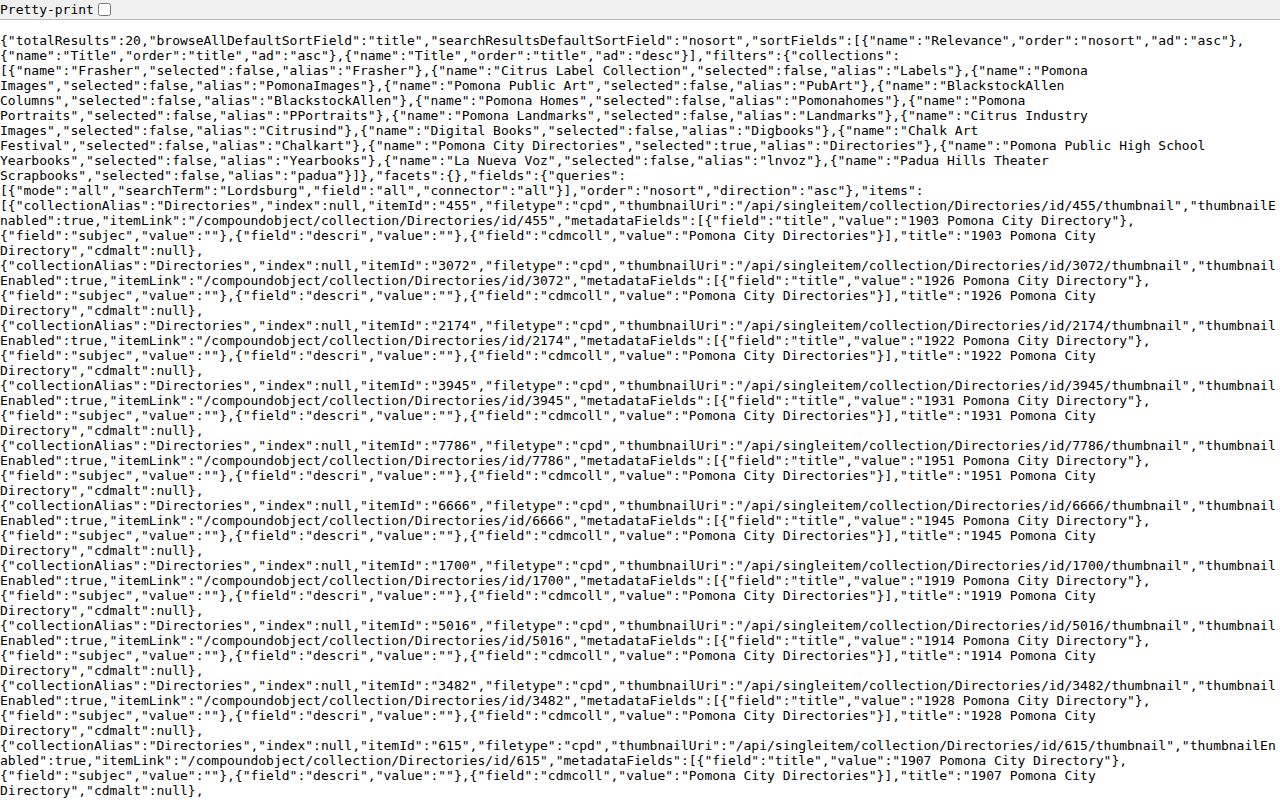
Read the page image and abbreviation key because OCR can confuse initials, h, r, and broken street words.
The full collection methods belong on the city directories page. Here, the directory's job is to place a listed person at a historical address between recorded conveyances.
Pair La Verne Previous Residents with Census
The federal population census is public through 1950 under the 72-year rule. Census schedules can add household relationships, ages, birthplaces, and occupations on the enumeration date. A city directory can bridge years between census snapshots, while a deed can show a title transfer without naming every occupant. The official Census QuickFacts page helps confirm the modern place label before comparing older household records.
Open the corresponding Pomona-area volume, record the house number and street, then compare the census enumeration district and household line. A name may appear under Lordsburg, within a township or precinct, or with a street label that differs from the modern form.
The captured Pomona Public Library directory collection provides page images and downloads for the historical comparison.
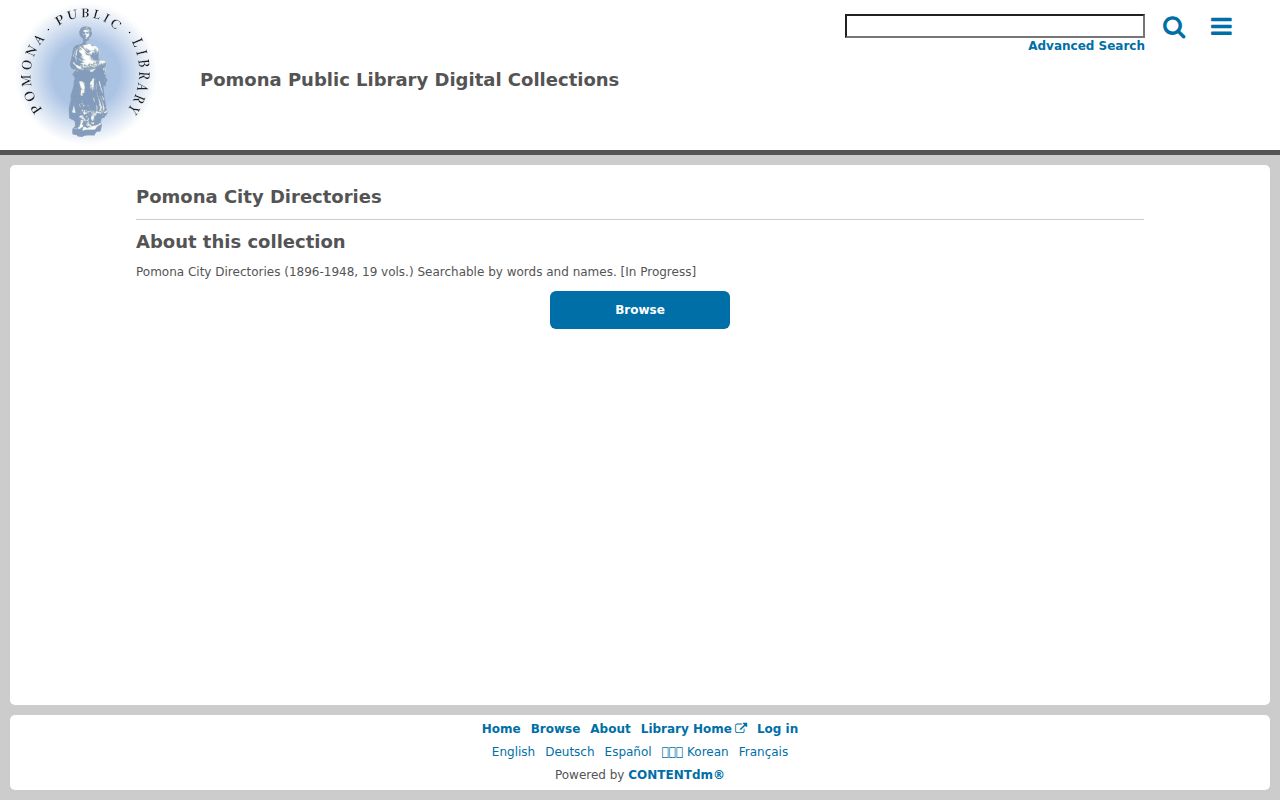
Use the original image rather than OCR when an address or initial decides whether two entries are the same household.
- Enumeration district
- The census area assigned to an enumerator for a particular census period.
- Household
- The people counted together on the census date, not necessarily the full year-round group.
- Listed occupant
- The person printed in a directory, often a subscriber or principal entry.
Search Lordsburg for La Verne Previous Residents
Previous residents can disappear when a place-name search changes. La Verne adopted its current name in 1917 after the settlement was known as Lordsburg. Older directories, newspapers, deeds, maps, and census schedules should be searched under both names. College material may also use Lordsburg College or La Verne College.
The Lordsburg-to-La Verne change is a practical index key. It does not prove that a street was renumbered, and no official street-renumbering year was verified. When a suspected address changes, compare the AIN, tract, lot, block, legal description, and map rather than inventing a date.
The La Verne Historical Society resources page identifies local publications and the repository for Lordsburg-La Verne Leader microfilm. Ask for reel dates before relying on a specific issue run.
The captured historical-resources view points a La Verne address-history search toward local newspaper and community material.
That archive route can explain a name change, family link, or departure that a deed alone cannot.
La Verne Permit Records Date a House
La Verne planning and building files can date construction, additions, inspections, and project work. A permit may name an applicant, property owner, architect, contractor, project address, valuation, and milestone. Those fields establish project involvement. They do not establish that the applicant occupied the parcel.
Check city department pages first, then contact Community Development or the City Clerk for a focused request. The city's form allows a records description, date range, department, examine or copy choice, and pickup, email, or mail delivery. Sensitive complainant information, private phone numbers, security details, and protected addresses may be withheld.
Use permits to explain a change in the house or parcel, then use directories, census, newspapers, and probate for the people layer.
Close a La Verne Previous Resident Trail
When a former household ends in the directory, the La Verne Leader can supply an obituary, marriage or birth notice, photograph, or social item. Wilson Library's NewspaperArchive material is especially useful for surname variants, school names, club references, and Lordsburg searches. The public description does not state an exact issue run, so ask the library for coverage and reproduction details.
Probate can identify heirs and explain a transfer after death. Cemetery or sexton records can close a deceased person's trail. The Superior Court holds probate files and wills filed in estates; RR/CC holds recorded deeds and affidavits. Compare names, dates, and the legal description before connecting an estate event to the address.
The captured Wilson Library La Verne Leader archive description shows the newspaper route for previous residents and family history.
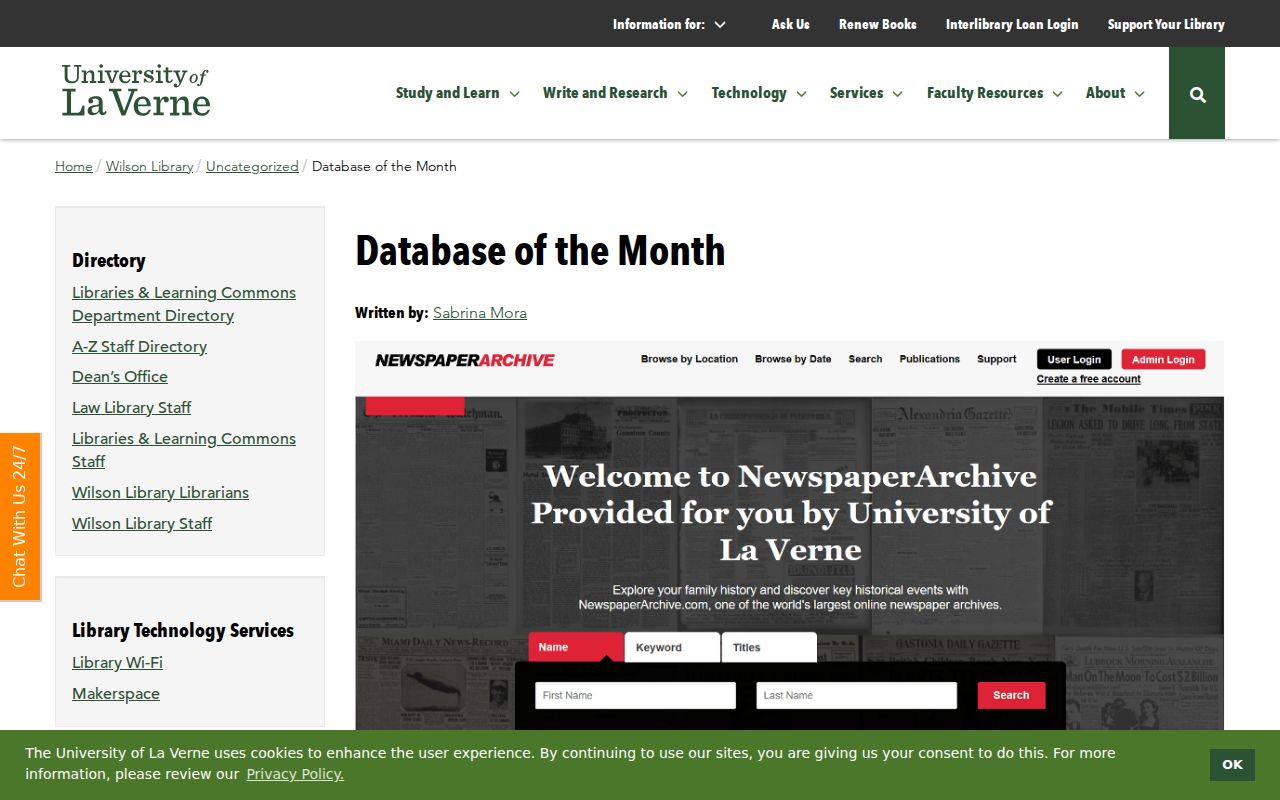
A notice becomes stronger evidence when paired with a dated directory entry, census line, deed, or cemetery record.
Past La Verne Households and Directories
Previous residents and past owners are not interchangeable. A chain of title follows recorded conveyances. A city directory follows a listed subscriber or occupant. A census counts a household on one date. An obituary or probate file can explain a departure or transfer. The best address history places those source types on one timeline and labels each claim.
For a current street chain, use the By Street page. For the collection mechanics and entry conventions, use the City Directories page. For a single named person, use Resident Lookup. Cross-linking should follow the question, not force a second copy of the same record description.
Lawful use. Previous-resident research in La Verne is for house history, family history, archives, and personal curiosity. Do not use an address history to stalk, harass, track, intimidate, or harm a living person.
Note: A gap between two editions brackets a change but does not prove the exact date of a move.