
La Verne Street Directory Starts Here
A street-by-street search is a chain, not a single lookup. Begin with an exact USPS-formatted address. The Los Angeles County Assessor can turn that address into an AIN, or Assessor Identification Number. The parcel map then shows nearby AINs. An event row can supply a recording date and document number, which bridges the parcel to the Los Angeles County Registrar-Recorder/County Clerk. A lawful voter-file product or a historical reverse directory may add a listed person, but those sources have different limits.
The order below protects against a common error. Ownership, a tax mailing destination, a listed occupant, and actual residence are four different claims. A useful La Verne street directory record says which claim the source supports.
- Normalize the address with USPS, then enter it in the county Assessor Portal.
- Save the AIN, situs, legal description, and any event document number.
- Open the Assessor Map Search and click adjacent parcels rather than guessing from house numbers.
- Use the document number or Norwalk name-and-year index to reach the recorded deed.
- Add voter, city-file, reverse-directory, or census evidence only when its access rule and date fit the question.
That workflow turns a street directory into a documented parcel trail. It does not create a roster of everyone who lives along the street.
La Verne Street Records in Assessor Search
The Los Angeles County Assessor Portal accepts an AIN or street address. A parcel result can display the situs, legal description, use and parcel type, tax-rate area, status, exemption indicator, land and improvement values, building characteristics, year built, units, and event or assessment history. The public Internet detail page does not offer a dependable owner-name mode. If an owner field is absent, use the official roll channel or counter instead of treating the blank as proof that no owner is recorded.
Address search can fail for corner lots, multi-unit parcels, commercial sites, new development, and gaps in street numbering. Map Search is the fallback. The county GIS data portal can add jurisdiction, zoning, and district layers, but the map remains a parcel tool rather than a people list.
| Search by AIN or Address | Text or autocomplete field. The AIN is generally displayed as ####-###-###. |
|---|---|
| Map Search | Opens a spatial browse mode for nearby parcels and clickable parcel detail. |
| Parcel fields | Situs, legal description, use, status, values, building facts, event history, and assessment history. |
| Public owner search | Not a general Internet feature; use the lawful assessment-roll or Property Data Sales route. |
Read the Assessor map-search help before changing only the house number. Nearby cross streets often reveal the AIN when the exact string does not.
La Verne Address Records: Situs and Mail
Three address fields can point in different directions. Situs is the physical parcel location. Mailing is where tax correspondence goes, and it may be outside La Verne. Legal description identifies the land through a tract, lot, block, subdivision, or related description. A street directory that mixes these keys can attach a tax notice or a deed to the wrong place.
Keep the AIN beside every note. When a parcel splits or merges, the street string may look stable while the land record changes. Corner parcels and condominium AINs also defeat a simple sequence of house numbers. Use the map, legal description, and event history together.
- Parcel
- A mapped unit of land with its own county identifier and assessment record.
- Situs address
- The location used to identify the physical parcel in the Assessor and city records.
- Tax mailing address
- The destination for an owner or taxpayer's correspondence, not a guaranteed residence.
- Plat
- A recorded map that lays out lots, blocks, streets, and subdivision relationships.
- Criss-cross directory
- A historical directory section keyed by street and number, then by a listed occupant or subscriber.
These definitions are the guardrail for a La Verne street directory. They also make a later deed or directory comparison easier to audit.
Note: The AIN and legal description usually outlast a change in postal wording or a mistaken house-number assumption.
Browse La Verne Street Parcels
Open the target parcel in Assessor Map Search, zoom to the street segment, and click each contiguous parcel. Capture the AIN and situs for every parcel, then open its detail separately. The county GIS portal can add city limits, zoning, districts, and subdivision context. No verified radius or buffer export was found in the basic Assessor interface, so a careful worksheet is more dependable than a guessed circle around an address.
The Los Angeles County GIS Data Portal is useful for layers, while the Assessor map is the place to connect a parcel shape to an AIN. Record the legal description, parcel use, year built, and event document reference. Do not copy personal rows from a restricted source into a public list.
The captured county map-help view explains how the parcel map supports a La Verne street search.
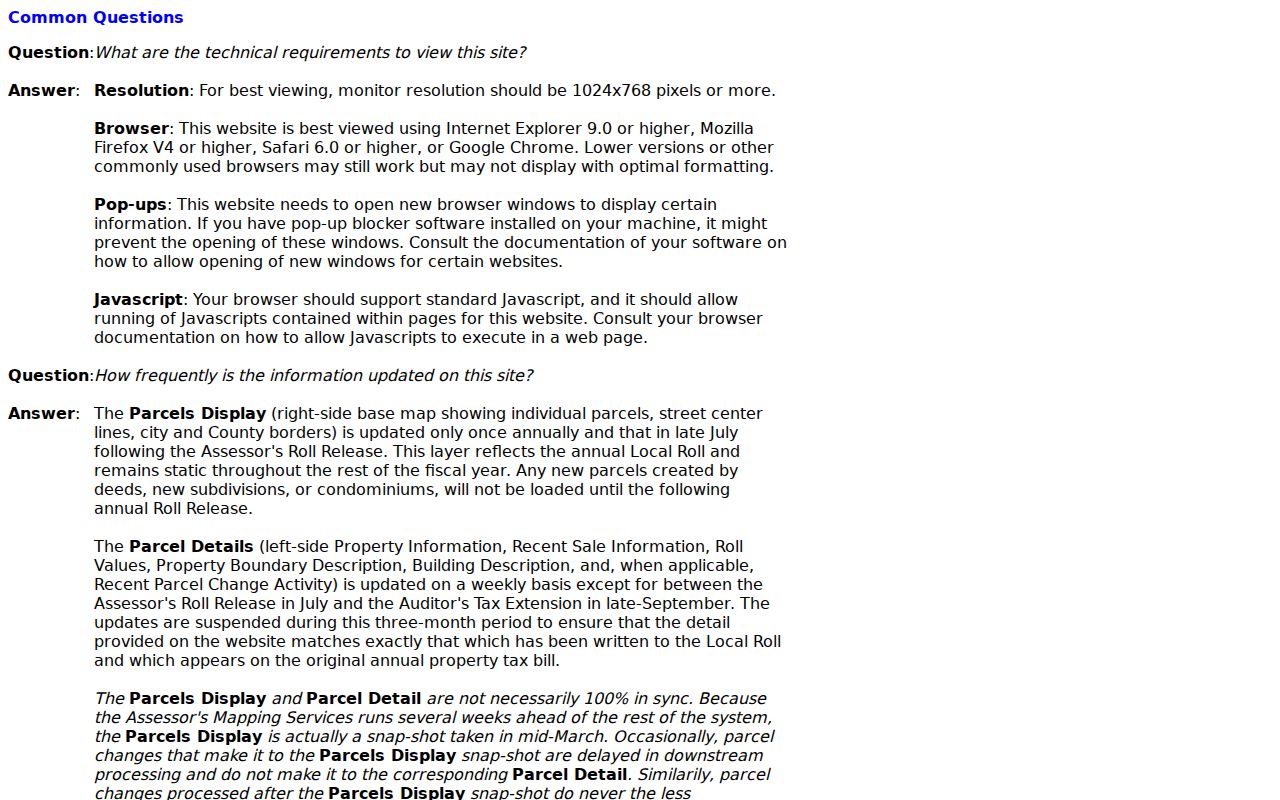
Clicking parcels one by one keeps the block worksheet tied to the actual map instead of a number sequence.
La Verne Records Arranged by Street
Several record sets can be read beside a street, but they do not all describe residents. The coverage table shows the useful handoff between them. Assessor facts and city permits are address-keyed. Deeds are name-and-year indexed at the county counter. The voter street index is a restricted product. A reverse directory is a historical listed-occupant source.
| Record Set | Keeper | What It Shows | Access |
|---|---|---|---|
| Parcel and tax record | Los Angeles County Assessor | AIN, situs, legal description, values, events | Free address or AIN portal |
| Parcel map and GIS layers | Assessor and LA County GIS | Adjacent parcels, jurisdiction, spatial context | Free map browse |
| Deeds, liens, and releases | RR/CC Recorder | Grantor, grantee, recording data, legal description | Norwalk index or known-document order |
| Voter street index | LA County Elections | Registered voters where a lawful product is released | Contract and permissible purpose |
| Permits and code files | City of La Verne | Project address, applicant, owner, contractor, work dates | Department or CPRA request |
| Reverse directory | Libraries and digital collections | Historical listed occupant or subscriber by address | Free online or library access, collection dependent |
The street name ties the sets together for a human reader, but the AIN and legal description do the safer work. A directory entry can support a household hypothesis. A recorded deed can support title history. Neither one lists every person who lived at the address.
La Verne AIN Events to Deed Records
Assessor event history can show a recording date, document number, document type or reason, number or percentage of parcels, and sometimes an indicated documentary-transfer-tax value. Write the event into the worksheet. Then use the known number to order the complete document from RR/CC or inspect the relevant name-and-year index in Norwalk.
The Treasurer and Tax Collector offers a separate AIN payment-history search. It shows the AIN, address, last-updated date, and secured-property payment history for only the past three fiscal years. Payment status, default year, assessment value, and a homeowner-exemption flag do not prove who occupies a parcel.
The captured Treasurer-Tax Collector payment-history page shows the AIN field used in the tax portion of a La Verne street search.
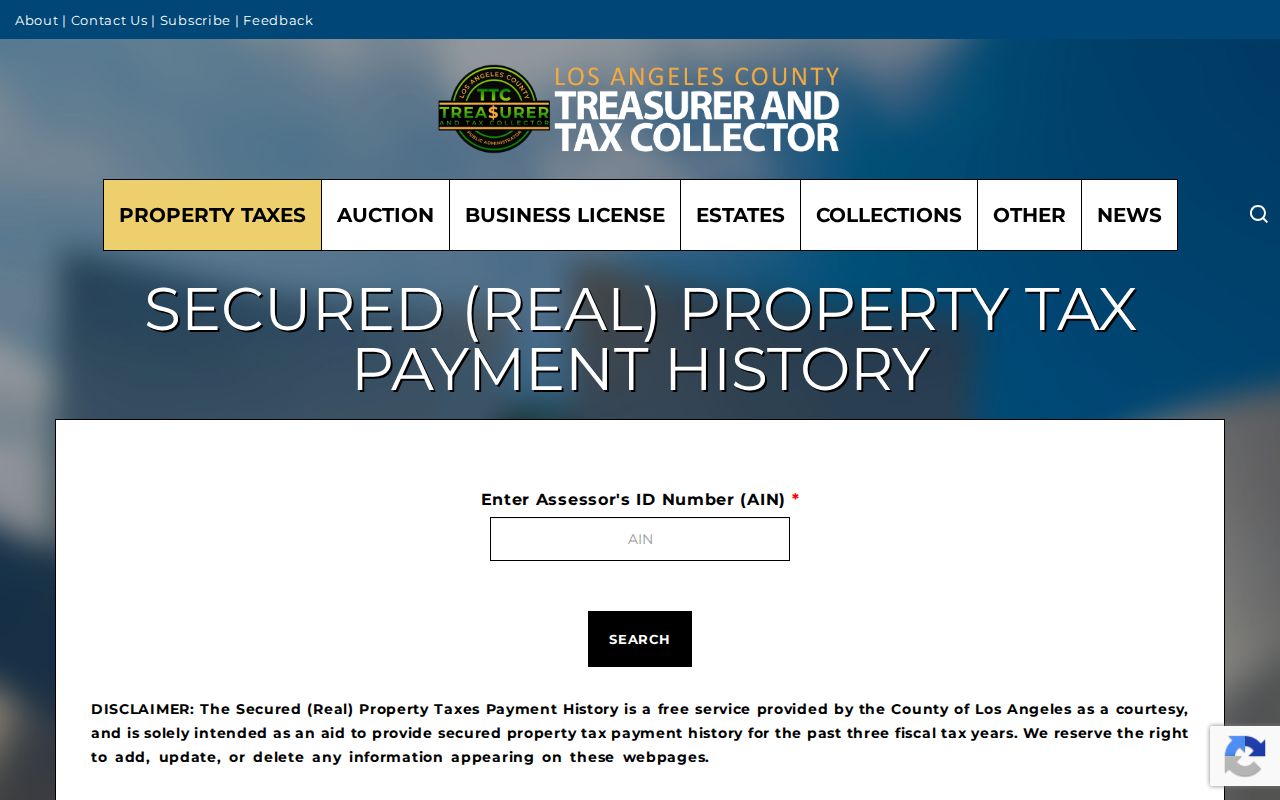
Tax history can confirm a parcel connection and date context, then the recorder supplies the deed evidence.
Note: Do not quote an indicated sales figure as the deed's exact price without reading the recorded document.
Why La Verne's Recorder Cannot Search Addresses
Los Angeles County's recorder index is not an Internet street directory. RR/CC records real-estate documents from 1851 to present, but the public index is inspected by grantor or grantee name and year in Norwalk. The office does not perform an address index search by telephone, and its real-estate records FAQ says an address search is not available.
Start with the Assessor because the document number bypasses the missing address key. For a historic parcel, search the legal description and earlier owners. For a current document, use an online staff-mediated order, in-person visit, mail, or fax. The county requires a whole-document copy rather than a partial page.
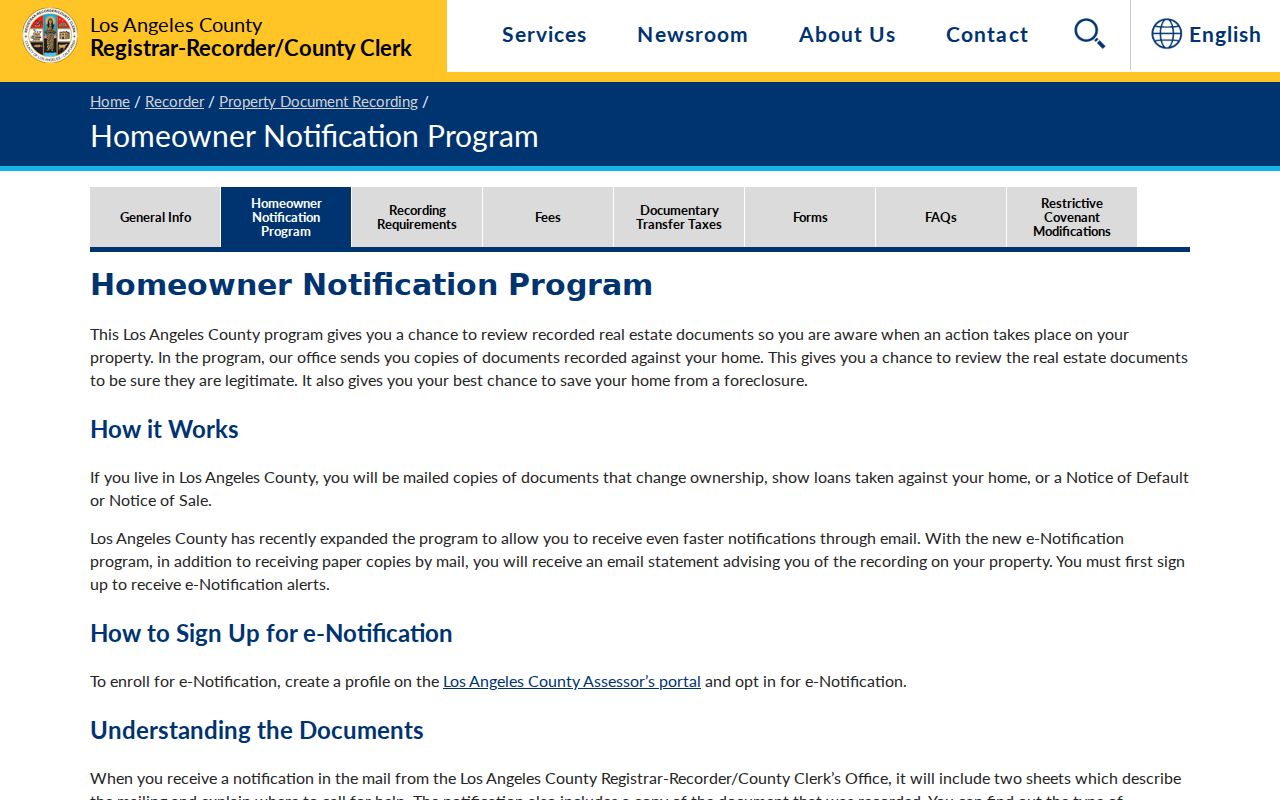
The county property-document notification page is a separate alert service, not a deed index.
The captured county notification view belongs beside the recorder explanation because it shows an official way to notice a document event without creating a public street roster.
Verify every mailer with RR/CC before paying or sharing information. The custodian's published contact is the safer route.
Read La Verne Streets Under Lordsburg
Historical address work has a local name trap. The community was called Lordsburg before the 1917 change to La Verne. A directory, census, map, deed, or newspaper search limited to “La Verne” can miss an earlier entry. The University of La Verne also appears under Lordsburg College and La Verne College in older material.
The Los Angeles Public Library's digitized Los Angeles-area city and street directories cover a selected 1875 to 1987 range. Search Lordsburg, La Verne, Pomona, and surname variants. Inspect each title page because a regional volume is not proof that every page includes the city. Street-address sections can reverse the search from a house number to a listed occupant.
The local Pomona Public Library digital collection is stronger for the verified 1896 to 1951 irregular run. Its OCR can confuse initials, the letters h and r, broken words, and street names, so page inspection is the final check.
The historical collections are described in full on the La Verne city directories page. This page keeps the focus on using an old address as a street key.
La Verne Street Records Add Work History
La Verne planning, building, and code files can add a useful date and project layer. A file may identify a project address, parcel, applicant, owner, architect, contractor, permit type, valuation, inspection milestone, or code case. That is evidence of a project connection. It is not proof that an applicant lived at the address.
Check the city website and department pages first. Then call Community Development at 909-596-8706 to identify the custodian, or submit a focused request through the City Clerk using the La Verne public-records request form. Police reports go to the Police Department at 909-596-1913. Complainant data, private phone numbers, security plans, and protected home addresses may be redacted.
Ask for records sufficient to show a permit number, address, date range, and work type. The request should not ask staff to build a list of people along a street.
La Verne's Restricted Voter Street Index
The county's Index to Voter is a street-oriented product, but Elections Code section 2194 limits how voter-registration information can be used. Countywide, precinct, district, or city files require a contract and the product fee. The county lists a $146 countywide file, a $54 precinct, district, or city file, and a $39 additional file. The street index has separate per-thousand or per-page charges depending on the permitted product.
A lawful release can help a civic or scholarly block study, but it is not authorization to publish a household list. Driver-license, signature, Social Security, Safe at Home, and confidential-voter data remain protected. Participation history does not show a ballot choice. The individual self-status route is for the voter checking their own record.
For a La Verne street directory, treat the voter file as a narrow corroborating source. Do not make it the first step when a parcel or deed question can be answered through less restricted records.
La Verne Park Directory Limits
La Verne's public mobile-home park directory is a concrete community layer. It lists eight parks and 1,742 homes, with park names, addresses, unit totals, age or family categories, and operator contacts. The online category and A-to-Z search identifies a park or business contact. It does not expose resident names.
That distinction matters on streets with a park address. A park operator, a city business record, a parcel record, and a current resident are different records. Use the directory to identify the correct community contact or to understand how the city groups an address, not to infer a household.
The captured La Verne mobile-home park directory shows the public category search.
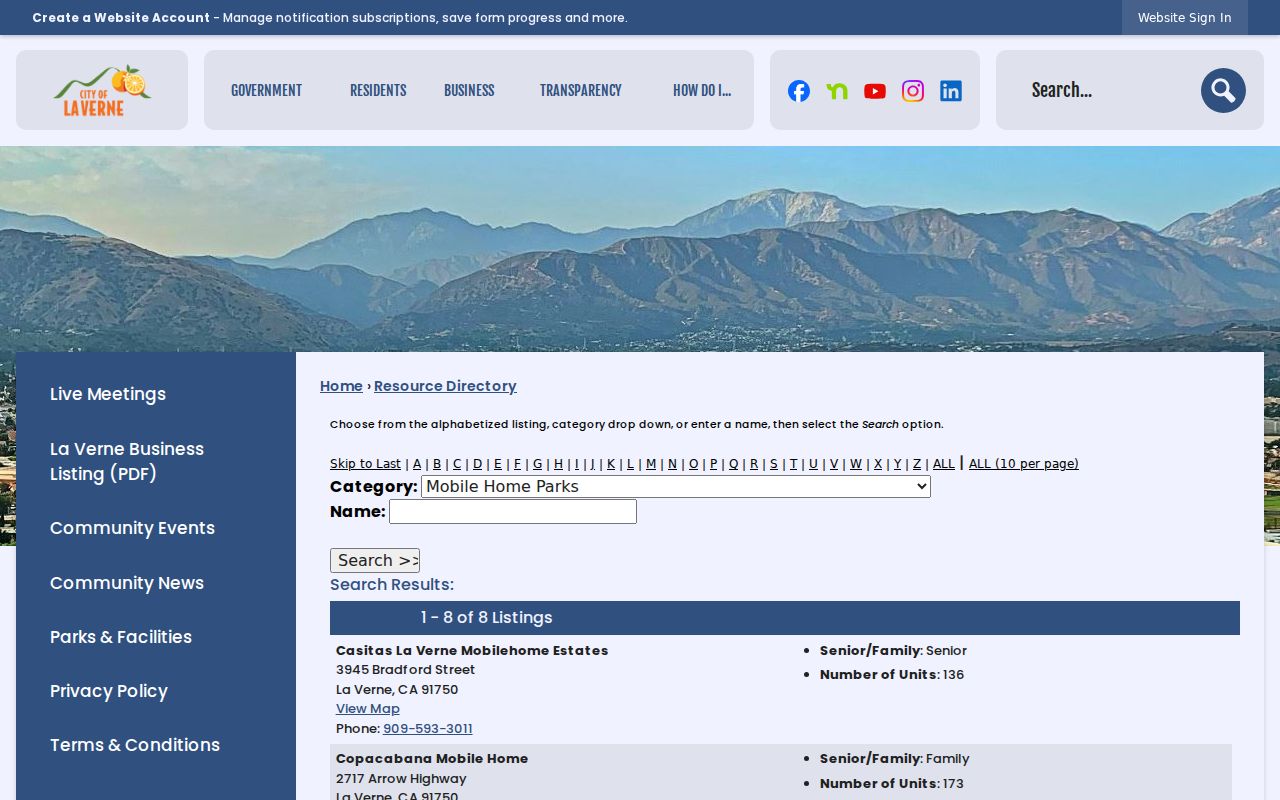
Official community contacts can support a records question while preserving private resident information.
La Verne Street Directory Limits
No public address record reliably enumerates every occupant, child, guest, renter, utility customer, delivery customer, or unlisted household member. DMV address data is protected by the federal Driver's Privacy Protection Act. Utility and customer lists are private. A reverse directory names a listed subscriber, not every person in a home.
Property records have their own limit. The assessed owner may receive mail somewhere else. A homeowner-exemption indicator is consistent with a principal-residence claim but does not prove every occupant. A deed records title, not a move-in date. When the goal shifts from a whole street to one person, use the La Verne resident lookup workflow and verify the identity with dates and identifiers.
Lawful use. La Verne address records support personal, lawful research, family history, and civic curiosity. Do not use a street directory to stalk, harass, intimidate, or harm anyone.
Note: A missing name can mean a protected address, a different county, an offline index, a spelling variant, or a source that never listed the person.